Tag: transnational

Review: Naples and Bickham Mendez, Border Politics

Volume reviewed for the Journal of Contemporary History, Vol. 52, No. 2 (2017), pp. 474-476. doi:10.1177/0022009416688182 Summary: This interdisciplinary volume weds social movement studies, which remains largely embedded in the social sciences, with border studies, a growing field with roots in geography, anthropology and women’s studies. The editors take an intersectional approach, looking at how…
Read more
Bordering Germany(s): A Tandem History of the Rhine and Oder-Neisse Borderlands, 1949-89

Präsentation beim IV. Kongress Polenforschung zum Thema “Grenzen im Fluss” in Frankfurt an der Oder und Słubice, 23.-26. März 2017.

Late Cold War Tandems: Solidarities and Anxieties of the 1980s

The purpose of this workshop, organised as a collaboration between the University of Sheffield, Humboldt-Universität zu Berlin, and Universiteit Utrecht, is to explore the possibilities of ‘tandem history’ (Kate Brown) as a transnational approach in new research on the final decade of the Cold War.

Fließende Grenzen? Der Rhein und die Oder-Neiße-Linie im Kalten Krieg (1949–1989)

Projektvorstellung im Kolloquium von Prof. Dr. Thomas Mergel, Humboldt-Universität zu Berlin, 15. Juni 2016.

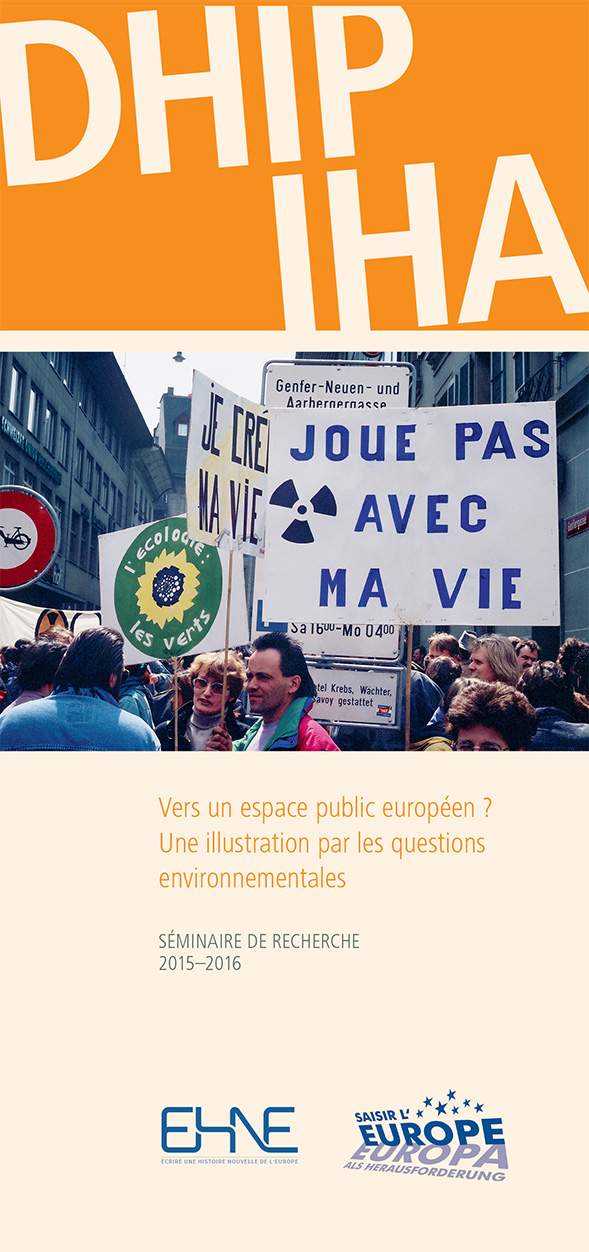
Transnational mais pas trop européen? Le mouvement franco-allemand d’opposition à l’énergie nucléaire dans les années 1970

Présenté à l’Institut historique allemand à Paris dans le cadre du séminaire de recherche « Vers un espace public européen ? Une illustration par les questions environnementales ».

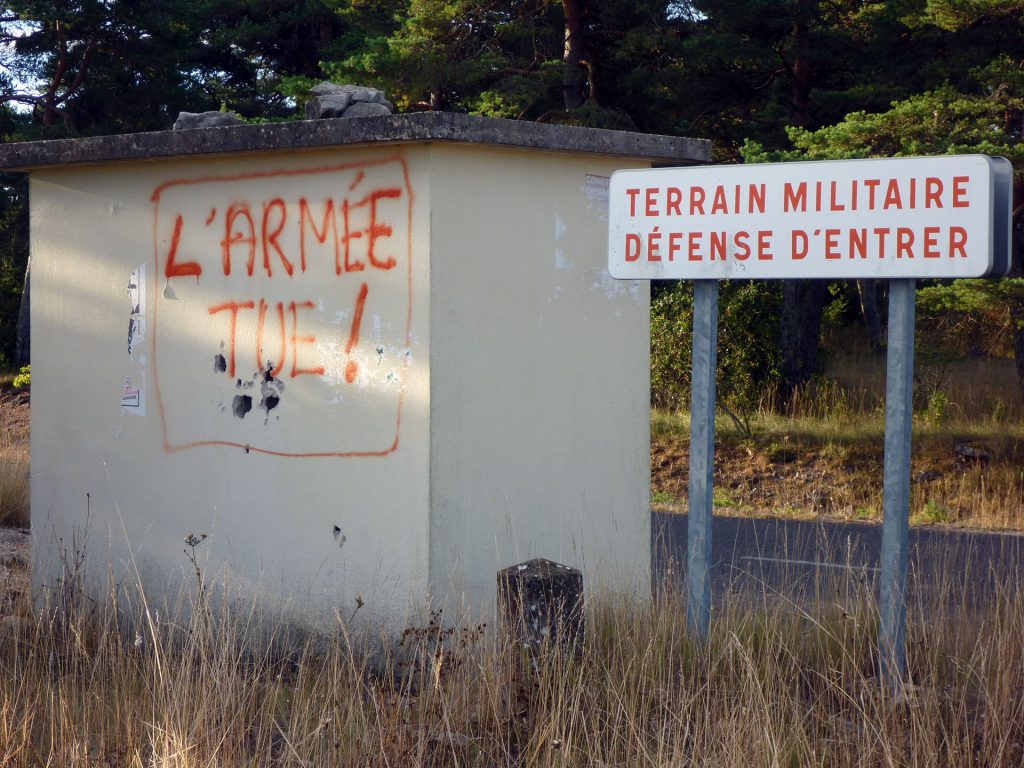
The Transnational in the Local: The Larzac Plateau as a Site of Transnational Activism since 1970

Article co-written with Robert Gildea and published in Journal of Contemporary History, vol. 50, no. 3 (July 2015), 581-605.

« L’électro-fascisme n’a pas de frontière ! » Deutsch-Französische Anti-AKW-Proteste der 1970er Jahre

Vortrag im Rahmen des Deutsch-Französischen Kolloquiums, Centre Marc Bloch Berlin, 7. Mai 2015.

Building Blocs: Germans and Their Neighbours in the 1970s

Presented at the ‘Living in European Borderlands’ conference, Université de Luxembourg, 20-22 November 2014. Abstract: The 1970s constituted a period of increasing cross-border integration within the competing transnational blocs of Eastern and Western Europe.  For the first time since the Second World War, East Germans and Poles could visit one another’s countries with relative ease,…
Read more

A Specifically 1970s Transnationalism? Anti-Nuclear Protest in France and West Germany

Presented at the Transformationen der Ökologiebewegung conference, Heinrich-Böll-Stiftung, Berlin, 14-15 November 2014. Abstract: The 1970s were a period in which local and decentralized protest action against nuclear energy collided for the first time with an emerging global environmental consciousness.  Were the anti-nuclear protests of that decade therefore unique in their “transnational” nature? Did cross-border interactions…
Read more

Review: Timothy Scott Brown, West Germany and the Global Sixties

Monograph reviewed for German History, Vol. 32, No. 3 (2014), pp. 507-509. doi:10.1093/gerhis/ghu024 Summary: Brown offers an incisive critique of many supposedly ‘transnational’ studies published in the last decade, focused as they are on the accumulation of national case studies.  His own ‘transnational’ tells us far more about how Germans drew on ‘the global’ than…
Read more

Protest Movements in Western Europe and the USA, 1960s-1980s

Taught at the Humboldt-Universität zu Berlin, Sommersemester 2014.

Beyond ‘New Social Movements’: Transnational Anti-Nuclear Protest in France and West Germany

Presented at the ‘Shaping the 1970s’ workshop at the Bristol Institute for Research in the Humanities and Arts (University of Bristol), 7 November 2013.

« Larzac-Gorleben : même combat » ? Competing Franco-German Solidarities in Local Struggles of the 1970s

Presented at the annual conference of the Society for the Study of French History (SSFH), Cardiff, 30 June 2013. Abstract: Throughout the 1970s, the struggle of 103 farmers against the expansion of a military camp on the Larzac plateau attracted widespread support from French and foreign activists.  The farmers of the Larzac cultivated relations with…
Read more

“Lieber heute aktiv als morgen radioaktiv”: Die Anti-Atomkraft-Bewegung in Frankreich und Westdeutschland, 1968-1981

Presented at the Colloquium zur Zeitgeschichte (Prof. Dr. Christiane Kuller), Freie Universität Berlin, 13 December 2012.